
Guides
Lab-grown and natural diamonds, plainly compared
A diamond is a crystal of carbon. The useful question is where that crystal began, and what the origin changes when you are choosing a ring.
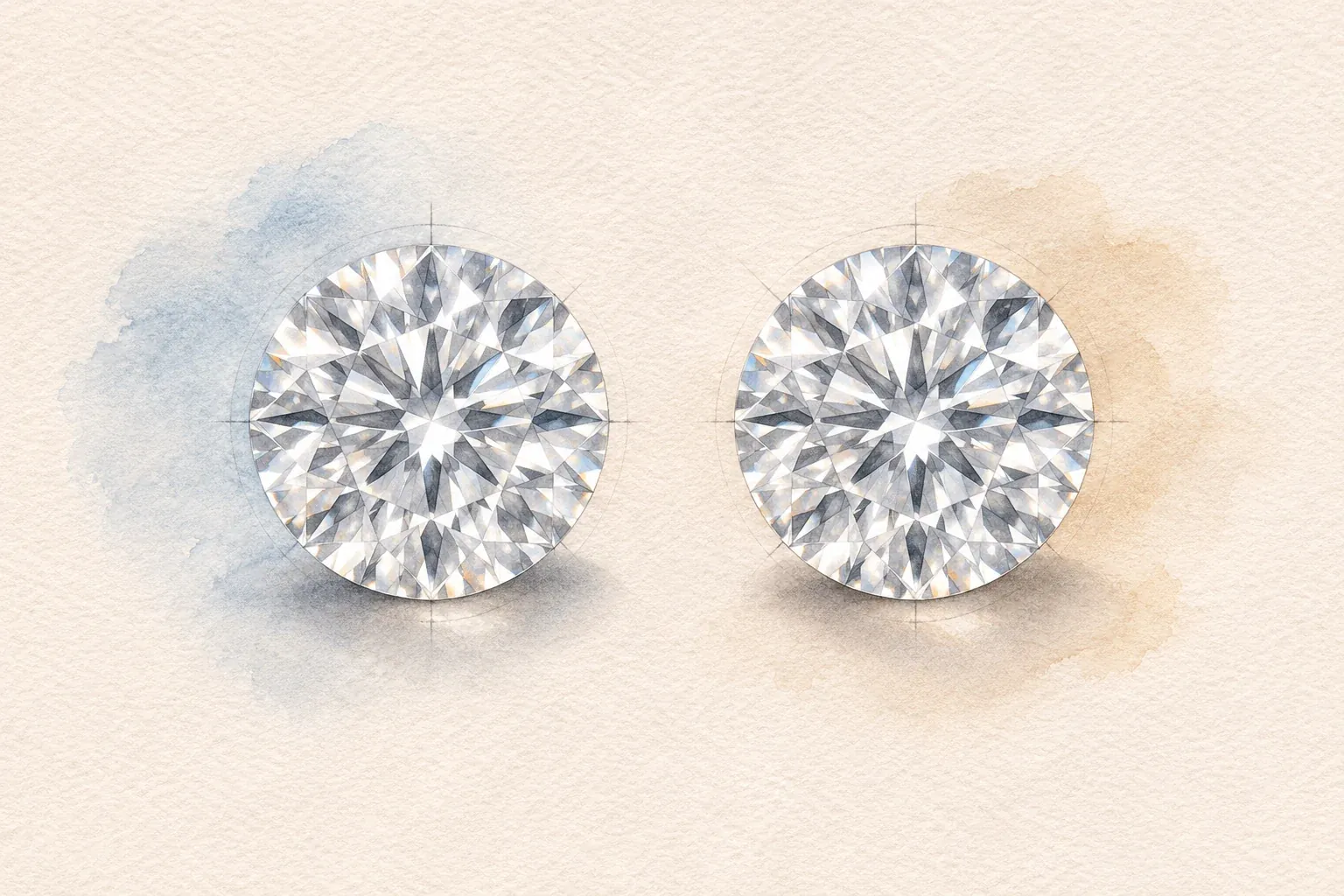
The same mineral
A natural diamond forms in the earth over a span of time no workshop can imitate. A lab-grown diamond is grown by people, in a laboratory, from a diamond seed. The two are the same mineral. They share the crystal structure that gives diamond its hardness and its way of holding light. On the Mohs scale, diamond sits at the top. That is true of both.
A finished stone in a ring does not announce its origin to the unaided eye. Grading laboratories use instruments that read growth features a jeweler's loupe does not show. An honest report states the origin in words. If the diamond was grown, the report says laboratory-grown. If it came from the earth, the report says that too. You should not be left to infer it from a price or a story.
What the difference is
The difference is origin, and the path the crystal took. Both are diamond, unlike a lookalike. Cubic zirconia and moissanite are other materials. They can be handsome, and they are not diamond. A lab-grown diamond is diamond. In the United States it may be sold as a diamond when the laboratory origin is disclosed. OVOEU discloses it, on the report and in the conversation.
In the wider market, a lab-grown diamond of a given size and grade is often offered at a lower price than a natural diamond with a similar report. That describes the wider market, not a quotation from this house. How an OVOEU commission is priced is a separate matter, set out in What a custom engagement ring costs.
What still decides the look
Origin does not replace cut, color, clarity or carat. Two diamonds with the same outline can look quite different if the proportions differ. Carat measures weight, not the width of the face you see. Our ring inspirations begin with shape, setting and proportion before any of those become a decision.
If you want to begin with the outline, oval, emerald and round is a calmer place to start than the origin debate. The way the stone is held changes the outline again. Bezel and prong describes the two settings people ask about most.
How the report names the stone
IGI and GIA both grade lab-grown diamonds, and both state that the stone is laboratory-grown. Many reports also name the growth method. The two methods you will see are HPHT and CVD. They are ways of growing diamond, not two species of gem. HPHT and CVD explains them without asking you to declare a winner.
A report is a laboratory's opinion of the characteristics it observed. It describes the stone. The setting, the metal around it and the hand all change what you see. That is why a Design Session looks at diamonds, not only at documents.
What OVOEU does
OVOEU is a lab-grown haute joaillerie house. New diamonds in an OVOEU piece are lab-grown, chosen for cuts engineered for sparkle, and an independent IGI or GIA report comes with the ring. The house does not sell natural diamonds. If a natural center is what you want for a new ring, this is not the atelier for that commission.
Engagement rings are at the heart of the work. At the atelier in Oklahoma City you may see more than 100 diamonds in person, to compare shapes and carat sizes. In a virtual Design Session, your Concierge shows certified lab-grown diamonds live on video, from an inventory of thousands. Either way, the stone is chosen with you.
A family diamond is different from a new purchase. It may have been worn for decades, and it may be natural. What can be done with that particular stone is decided once it is seen. Redesigning an heirloom explains how that conversation begins. Most commissions rest between $3,000 and $6,500, complete with the stone. That span is not a quote. You receive an exact quote with your Technical Drawing, before anything is committed.
Before we meet
A few questions.
Are lab-grown diamonds real diamonds?
Yes. A lab-grown diamond is diamond, the same mineral as a natural stone. A grading report identifies it as laboratory-grown so the origin is stated, not guessed.
Does OVOEU set natural diamonds in a new ring?
No. New diamonds at OVOEU are lab-grown, and an IGI or GIA report comes with the ring. A family stone is a separate conversation, begun only after the piece has been seen.
Can you see the difference without a report?
Not reliably, once the stone is cut. Specialized instruments can read growth features a loupe does not show. The report is how the origin is recorded, and your Concierge reads it with you.
Your Concierge
Begin with a conversation.
Nothing is decided in the first meeting. A Board is welcome, and never required.
Continue
IGI and GIA reports, and how to read them
What IGI and GIA diamond reports each record, how to read one without turning it into a score, and what arrives with an OVOEU ring.
HPHT and CVD, two ways a diamond is grown
What HPHT and CVD mean on a lab-grown diamond report, how the two growth methods differ, and why the stone in front of you matters more.
What a custom engagement ring costs
Most OVOEU commissions rest between $3,000 and $6,500 with the stone. The quote comes with the Technical Drawing. A 40% deposit follows prototype approval at The Fitting.