
Guides
HPHT and CVD, two ways a diamond is grown
HPHT and CVD are two ways a laboratory grows a diamond. They are two methods, and the stone in front of you still matters most.
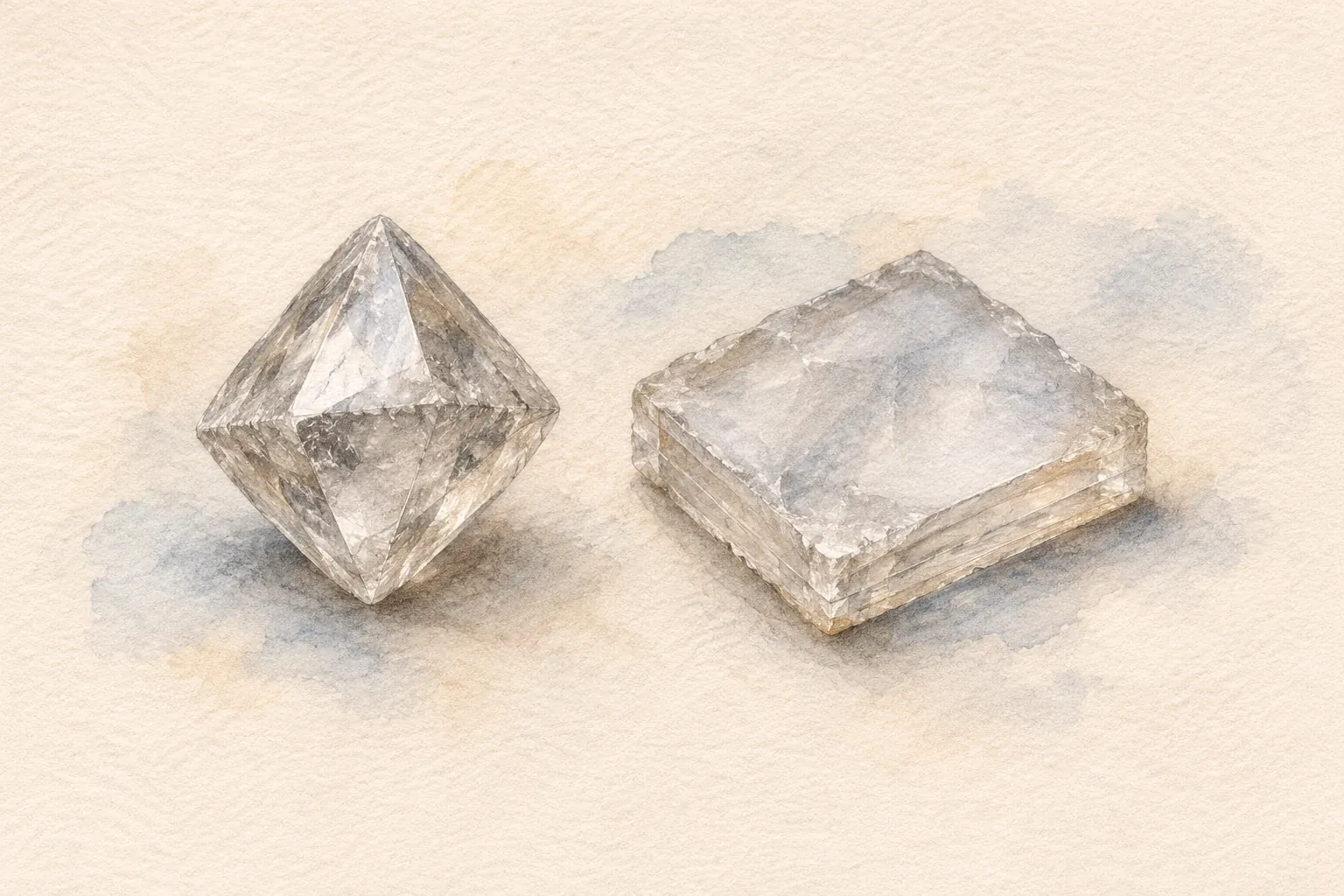
Two paths to the same mineral
Every lab-grown diamond begins with a seed, a thin slice of diamond, and a process that gives carbon a reason to join that seed as diamond rather than as some other form. There are two processes you will see named on reports. HPHT stands for high pressure, high temperature. CVD stands for chemical vapor deposition. Both produce diamond. Neither produces cubic zirconia or moissanite.
What follows is general knowledge about those processes, not a description of a machine inside the OVOEU atelier. OVOEU designs and makes jewelry. The diamond's origin is laboratory-grown, and the report that comes with the ring is how that origin, and often the method, is documented. If you are still deciding whether laboratory-grown is the right category at all, start with Lab-grown and natural diamonds.
HPHT
HPHT places the seed in a press with carbon, under pressure and heat high enough for diamond to crystallize. The conditions are an echo of the earth, compressed into a machine and a much shorter time. The rough crystal that comes out is then cut, the same way any diamond rough is cut: into an outline, a set of proportions and a polish.
An HPHT diamond can be colorless, and it can also carry a tint. Boron, when it is present, can lean a stone toward blue. None of that is a rule you can apply without the stone. A report and the diamond itself are the record. The initials HPHT do not tell you whether you will love the way it looks on a hand.
CVD
CVD grows diamond in a chamber rather than a press. A carbon-rich gas is introduced, the gas is broken down, and carbon settles on the seed layer by layer. The pressure is far lower than in HPHT. The crystal still has to be cut. Growth is not the same thing as the sparkle you see, which is largely the work of the cutter.
CVD material is often spoken of as starting with a brown or gray cast that may later be improved. Sometimes that improvement is a treatment, and a careful report says so. Sometimes the stone is already the color you want, with nothing further to disclose. Again, the particular diamond matters more than the reputation of the method. Read the treatment line with your Concierge. How to read an IGI or GIA report stays with that page of the document.
What the method does not decide
Neither method is universally more brilliant, more durable or more appropriate for an engagement ring. Brilliance is mostly cut: the facets and the proportions. Durability is the durability of diamond, provided the setting holds the stone well. Appropriateness is the person's hand, the clothes they already wear, and the vow the ring is for.
A bezel or a prong does not require one growth method. A round, an oval and an emerald cut can each be either. If a seller tells you that one method is the only one a serious ring may use, ask them to show you the stone they mean, and the report. The claim should survive contact with the diamond. Bezel and prong is about the setting, which you will see every day, rather than about the chamber the crystal grew in.
How OVOEU uses the report
In a Design Session, the diamond is on the table or on the screen, and the report is beside it. At the Oklahoma City atelier you may compare shapes and carat sizes in person, among more than 100 diamonds. In a virtual session the stones are shown live. The method is one line in that meeting, not the meeting itself.
You do not need to arrive knowing which initials you prefer. You may arrive with a preference, or with none. Your Concierge will tell you what the report says and what it does not say. The quote for the ring still comes later, with the Technical Drawing, and most commissions rest between $3,000 and $6,500, complete with the stone.
Before we meet
A few questions.
Does OVOEU grow the diamonds?
No. OVOEU is a house of design and making. The diamonds are lab-grown, and each ring arrives with an IGI or GIA report. The report is where the growth method, when the laboratory states it, can be read.
Is one growth method better?
Not as a rule. HPHT and CVD both produce diamond. Color, clarity, cut and the way the stone looks in the setting decide more than the initials on the report. Your Concierge looks at the diamond with you.
Will the report say which method was used?
Often, yes. A lab-grown report from IGI or GIA commonly names HPHT or CVD and notes a treatment when one is detected. If a line is unclear, ask. The report is meant to be read, not admired from a distance.
Your Concierge
Begin with a conversation.
Nothing is decided in the first meeting. A Board is welcome, and never required.
Continue
Lab-grown and natural diamonds, plainly compared
How lab-grown and natural diamonds compare as a material, what a grading report shows, and why OVOEU works in lab-grown diamond only.
IGI and GIA reports, and how to read them
What IGI and GIA diamond reports each record, how to read one without turning it into a score, and what arrives with an OVOEU ring.
Bezel and prong, two ways to hold a diamond
How a bezel setting and a prong setting each change the outline, the feel on the hand, and the way a wedding band sits beside an engagement ring.